Mater Hospital in Dublin
The Greatest Beer Run Ever: A Memoir of Friendship, Loyalty, and WarMater Hospital in Dublin is where Susan McGahern’s breast cancer becomes a matter of medical diagnosis and treatment, but not shared family knowledge. In John McGahern’s memoir, the hospital’s significance lies as much in the information sent from it as in Susan’s absences: doctors assess her chances, Francis (Frank) McGahern receives their advice, and Susan and the children are left with an incomplete account of what is happening.
Diagnosis and treatment
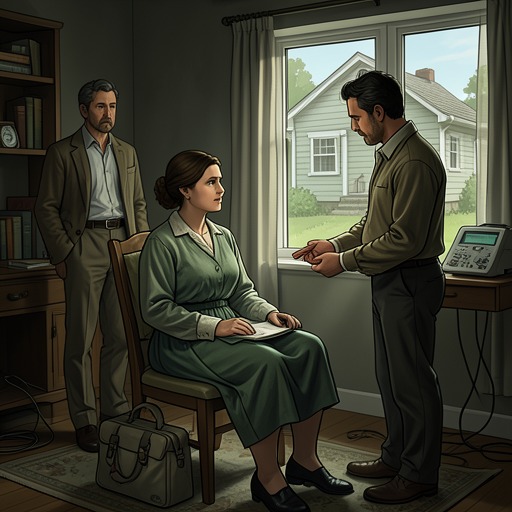
Susan was kept at Mater Hospital in Dublin for several weeks for tests and treatment after being diagnosed with breast cancer. During her absence, the children did not know where she was or what had happened to her; their father told them not to ask and instead to pray. Susan objected to this secrecy. In a letter from the hospital, she noted that Sean was becoming less easily put off about her whereabouts and expressed hope that she would soon be home with the family.
Her treatment included radical surgery and deep X-ray treatment. In a letter dated 8 December 1942, the doctor John Corcoran told Francis that Susan had a highly malignant growth and gave her a 30 per cent chance of complete recovery. He advised that she should continue teaching while her health allowed, and warned Francis not to take on financial liabilities in the hope of her recovery. The clinical estimate offered a specific, guarded hope; it was not a prognosis Susan herself was told.
Medical information and family decisions
Francis had already written to the doctor at the beginning of Susan’s illness and received a detailed report. Later, he asked for advice about whether she should give up teaching and what her chances of recovery were. The memoir describes his letter as defensive and slightly bullying in tone, but the decisive fact is what followed: he did not communicate either report to Susan or anyone else. He went ahead and bought Corramahon Farm, selling his homeplace at Gowna to pay most of the cost.
Mater Hospital therefore stands within a widening divide between medical knowledge and what the family was permitted to understand. The doctor’s advice framed Susan’s continued work as possible only while her health lasted, while the family’s practical arrangements proceeded without her knowing the prognosis. When Susan later suspected that the cancer might have returned, her stomach pain and recurring constipation and diarrhoea were explained to her as an unrelated illness from which she could recover if she made an effort. She asked Francis to write to the doctor in Dublin, but he was reluctant to do so because he had already communicated with him secretly.
Absence, return, and the limits of memory
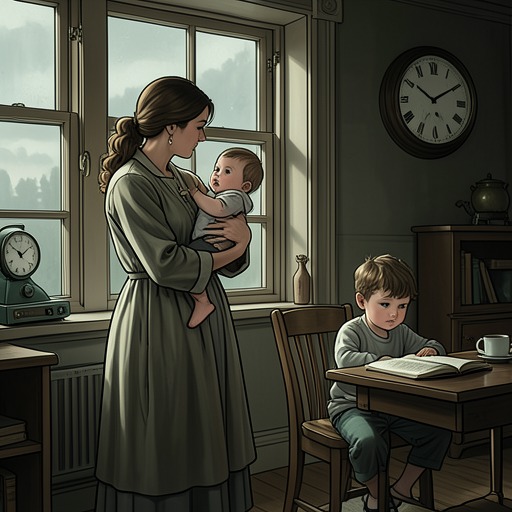
Susan briefly returned to the barracks around the birth of her daughter Dympna. The narrator remembers little of that stay beyond a vague, almost delirious happiness. His sharper memory is of travelling with his father in Packie McCabe’s car to a nursing home in Boyle to bring Susan and the baby home; his mother carried Dympna in a white shawl on the journey. Susan stayed only about a week before leaving again, and the children still did not know where she had gone.
Later, after a period in hospital, Susan was allowed out for a few days and saw her new home for the first time. She travelled alone by train to Dromod, where Pat McManus met her, and stayed with him and Maggie at their shop in Ballinamore. The visit was too short for her to go to the barracks; she said leaving would be too hard. Francis did not visit her, although Cootehall was only eighteen miles away. The journey and the missed visit extend the hospital’s significance beyond treatment: illness separates Susan from her children and home, while the family’s movements reveal how unevenly care and knowledge are shared.
The hospital in the memoir’s account of dying
As Susan’s symptoms worsened, the narrator recalls that she was suffering after returning to school and that the first note of despair entered her letters. She feared the cancer might have returned, but those around her resisted that knowledge. The adult memoir places this personal uncertainty within a broader reflection on how the dying become separated from the ordinary world of work and daily life, and how death is often obscured or denied by those who remain.
The account also refuses to reduce Susan’s illness to a medical forecast. Her faith may have sustained her, the narrator writes, but it could not remove the human pain of losing those she loved and cared for. The hospital’s diagnosis, the concealed report, Susan’s own suspicions, and the family’s evasions remain distinct strands of the story. By reconstructing them through remembered scenes and correspondence—with help from his sisters, who assisted with letters and restored scenes that had slipped his memory—the narrator makes the hospital a point where bodily illness, family silence, and retrospective knowledge meet.